
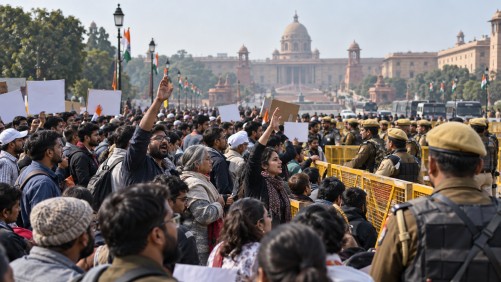
India’s Cockroach Janta Party (CJP) leaders have accused the government of Prime Minister Narendra Modi of stifling democratic dissent as demonstrations continue in Delhi. The protests, now in their second day, are demanding the resignation of Election Commissioner Gyanesh Kumar, who is alleged to have overseen a voter-list revision that reportedly purged around 130 million names from electoral rolls, potentially affecting minority communities.
Authorities have responded with heightened security measures across the capital, including police barricades, detention of protesters, and restrictions on public transport and internet services. Thousands have reportedly been detained as police attempted to disperse crowds. Despite these efforts, demonstrators, including students and CJP supporters, returned to the streets on Sunday to voice their demands.
During the protests, CJP leaders Abhijit Dipke, Saurav Das, and Ashutosh Ranka were detained but released on Sunday under conditions aimed at maintaining public order. Following their release, they vowed to continue the movement, criticising the harsh police response. Student activist Neha Bora and Delhi University student Surbi Yadav reported facing excessive force and poor detention conditions, galvanizing their resolve to persist in the demonstrations.
CJP leaders have expanded their criticisms beyond the election commissioner, now targeting Modi and Home Minister Amit Shah. Saurav Das accused the government of using force to protect political interests and warned that protests would persist.
The ruling Bharatiya Janata Party (BJP) has dismissed allegations of political interference, asserting that the voter-list revision is a legitimate process to eliminate ineligible voters. Party spokesperson Gaurav Bhatia defended the exercise, stating it aims to remove dead and illegal voters rather than manipulate election results.
The ongoing demonstrations underscore rising political tensions in India over electoral transparency and civil liberties. Opposition leader Rahul Gandhi has echoed calls for accountability, accusing the government of electoral misconduct, thereby amplifying pressure on the BJP amid concerns about the integrity of India’s electoral process.
As the protests continue, demonstrators remain committed to their cause, while authorities are focused on preventing further unrest in the capital. The situation highlights a deepening rift between the government and those advocating for democratic freedoms and electoral integrity.