
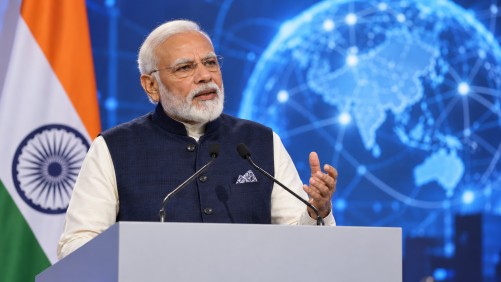
Prime Minister Narendra Modi has called for a global framework to proactively combat cyber fraud, urging enhanced international collaboration among governments, telecom operators, and financial institutions. Speaking at the Indian Mobile Congress in New Delhi, Modi highlighted the transnational nature of cybercrime, noting that perpetrators operating from one country can easily target individuals in another through intricate networks spanning various jurisdictions.
Modi’s appeal comes in the wake of a BRICS member countries’ declaration expressing alarm over organized scam networks and cross-border financial fraud. The declaration stresses the importance of intensified cooperation among law enforcement agencies, financial intelligence units, customs authorities, and technology platforms to detect suspicious transactions and thwart money laundering activities.
Recent reports have linked scam operations in regions like Cambodia, Myanmar, and Laos to multiple forms of online fraud, including impersonation scams, bogus investment platforms, and extortion related to loans. Alarmingly, some of these operations are tied to human trafficking, with individuals being deceived by false job offers and coerced into criminal activities abroad.
In India, cybercrime is an escalating financial threat, with government data revealing that reported losses surged from ₹7,465 crore in 2023 to ₹22,845 crore in 2024. This stark increase underscores the need for robust preventive measures, heightened public awareness, and more efficient inter-agency coordination.
During his address, Modi also emphasized India’s strides in digital transformation, citing the expansion of mobile connectivity, digital banking, and direct benefit transfers. He noted that the digital ecosystem has significantly improved access to government services, education, healthcare, and financial aid. Modi claimed that direct benefit transfers have channeled approximately ₹50 lakh crore into beneficiaries’ bank accounts, preventing around ₹5 lakh crore in potential leakages.
Additionally, Modi urged for a shift in India’s role from merely consuming digital technology to developing its own products, research capabilities, and intellectual property. He acknowledged the country’s advancements in semiconductor manufacturing and envisioned the next phase of the telecom sector fostering investment, innovation, exports, and domestic technology development. He proposed that the Indian Mobile Congress could be a catalyst for research, manufacturing, and technological innovation while bolstering digital security and global cooperation.