
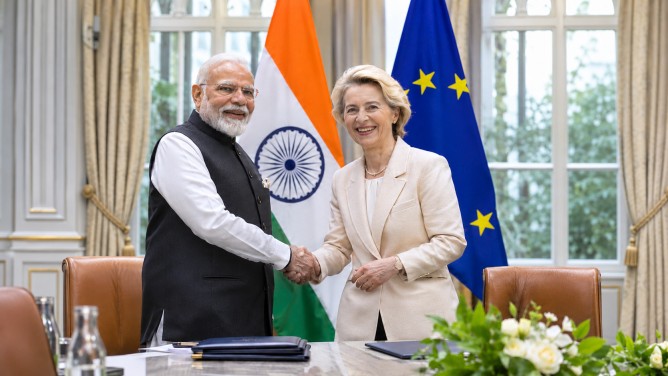
India and the European Union are poised to sign a significant Free Trade Agreement (FTA) during Prime Minister Narendra Modi’s visit to Brussels on December 16. This landmark deal seeks to enhance trade and investment ties between India and the 27-member EU bloc, potentially creating one of the largest trading markets encompassing around 2 billion people.
The agreement, which has been dubbed the ‘mother of all trade agreements,’ is expected to provide duty-free access to the European market for about 93% of Indian exports. In return, India will reduce import duties on select European goods, including luxury cars and wines. This move is anticipated to improve market access, bolster investment, and strengthen supply chains between the two regions.
Negotiations for the FTA concluded on January 27 after more than two decades of discussions. The European Commission has submitted the necessary legal documents, including the final text and tariff schedules, to the Council of the European Union for approval. Upon implementation, the agreement will link India, one of the world’s largest economies, with the EU, collectively accounting for approximately 25% of global GDP and one-third of international trade.
The European Union stands as India’s largest trading partner among individual economic blocs in goods, while India is a vital partner for the EU in services and international commerce. The proposed FTA is set to open new opportunities for businesses on both sides, encouraging cross-investment and deepening economic cooperation.
As the world watches, the finalization and signing of this trade agreement could redefine economic relations between India and the European Union, setting a precedent for other international trade agreements in the future.