
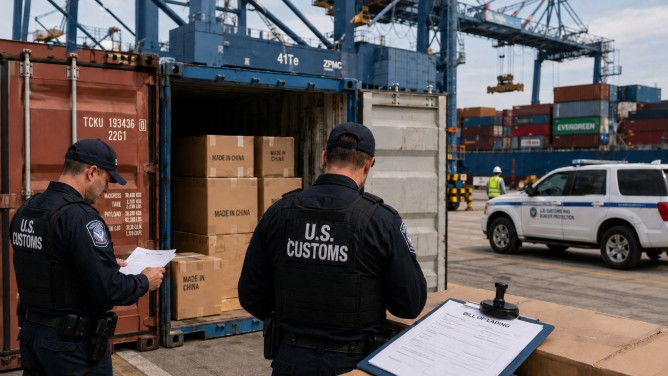
The United States has leveled accusations against 38 countries and the European Union, alleging their involvement in a “shadow transshipment network” used to funnel Chinese goods, which are subject to substantial US tariffs, into the American market through intermediary nations. This claim is detailed in a report entitled “The Great Transshipment Scam,” which estimates that such potentially illicit transshipment activities could be valued at approximately $60 billion, resulting in considerable losses in US tariff revenue.
Among those implicated are countries and territories such as India, Canada, Israel, Japan, Mexico, South Korea, Taiwan, and a range of others spanning continents, including Vietnam, Argentina, Bangladesh, Cambodia, and Switzerland. Additionally, major hubs such as Mexico, India, and Vietnam are identified as key transit points for US-bound goods originating from China, with the report suggesting that in 2025 alone, $67 billion worth of goods may have been rerouted this way, leading to an estimated $28 billion in lost US tariff revenue.
The report calls attention to specific regions like the Pune-Gujarat-Chennai corridor in India, where Chinese shipments, including items like electric pumps and compressors, have been noted to bolster local businesses while simultaneously creating heightened competitive challenges for US manufacturers. This dynamic has spurred concerns over the economic impact on American industry.
In response to these allegations, the United States is contemplating a series of measures aimed at curbing such practices. These include implementing more stringent inspections and interdiction efforts, imposing additional tariffs, enacting sanctions, and potentially restricting market access for nations found to be facilitating tariff evasion. These steps are part of a broader strategy to protect US economic interests and ensure compliance with existing trade regulations.