
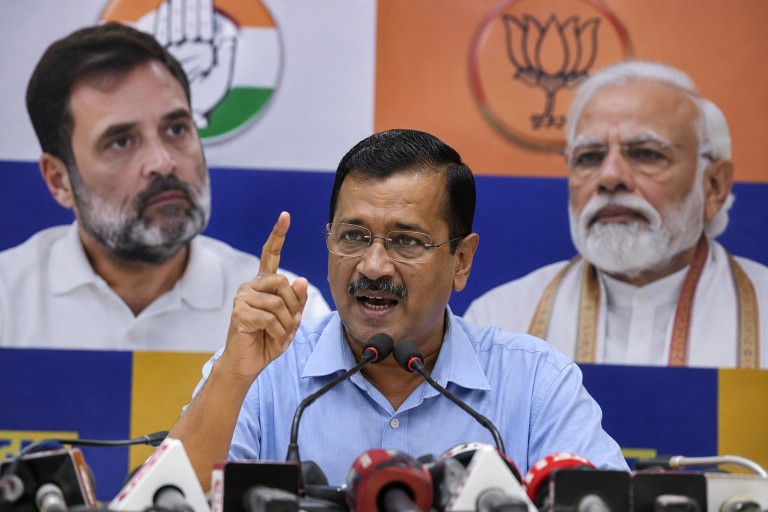
The Aam Aadmi Party (AAP) has leveled accusations against both the Congress and the Bharatiya Janata Party (BJP), suggesting that the two are acting in concert. This comes in the wake of Congress leader Rahul Gandhi’s protest near the Prime Minister’s residence concerning the NEET controversy. AAP MP Sanjay Singh has claimed that the protest was part of a government strategy to divert public attention from the ongoing student-led campaign demanding accountability for the NEET paper leak. Singh argued that Gandhi’s demonstration undermined the broader public movement.
Atishi, the Leader of the Opposition in the Delhi Assembly, also criticized the government’s handling of protests, highlighting what she sees as double standards. She noted that while student protesters and activists have faced restrictions and police action during demonstrations near Parliament, Rahul Gandhi was permitted to protest near the Prime Minister’s residence and even received a rapid response from the government. Her comments underscore the differing treatment of protests based on political affiliation.
The situation escalated when Union Minister Jitendra Singh met Rahul Gandhi at the protest site. Singh stated that the government was open to discussing NEET-related issues in Parliament, signaling a willingness to engage with the opposition on these matters. Despite this, the protest concluded with the police detaining Rahul Gandhi along with several other Congress Members of Parliament, adding another layer of complexity to the unfolding political drama.
The ongoing dispute has revealed growing tensions among opposition parties. The AAP has accused Congress of receiving preferential treatment and indirectly assisting the BJP, rather than standing in solidarity with the student movement. This allegation points to the challenges facing a unified opposition front in addressing key national issues, as internal disagreements continue to surface.