
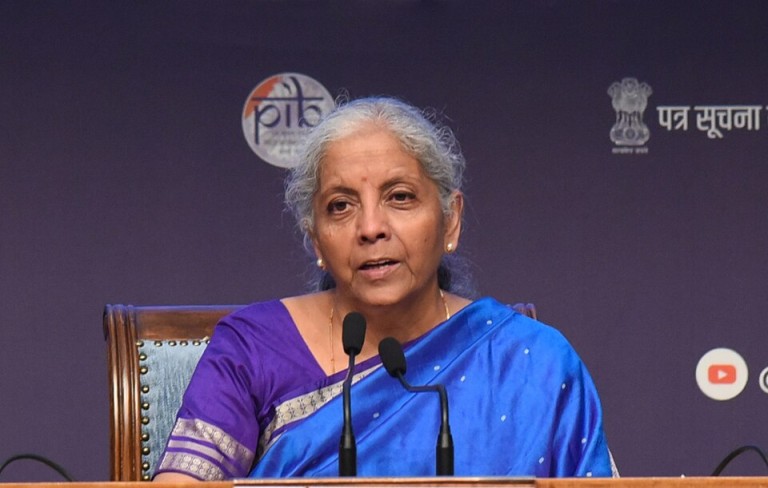
Union Finance Minister Nirmala Sitharaman has highlighted the government’s vigilant approach towards mitigating the economic impact of the ongoing crisis in West Asia on India. She expressed particular concern over the rising costs of fuel, fertilisers, and the pressure on the country’s foreign exchange reserves. During a recent event celebrating the anniversary of the Small Industries Development Bank of India, Sitharaman pointed out the significant challenges posed by escalating crude oil and fertiliser prices, alongside the surge in gold prices, which collectively strain the economy.
Despite these external pressures, Sitharaman underscored the strength of India’s economic fundamentals, cautioning against panic and the dangers of “fearmongering” amid the global uncertainty. She stressed that the majority of the current economic challenges are driven by external factors and called for responsible policymaking and communication to sustain public confidence.
The finance minister also discussed the government’s decision to reduce excise duty on petrol and diesel, acknowledging the projected revenue loss of nearly ₹1 lakh crore. This measure, she stated, was imperative to alleviate the financial burden on consumers. Additionally, she voiced concerns about the delayed payments to micro, small, and medium enterprises (MSMEs), revealing that approximately ₹8.1 lakh crore remains pending in dues. Sitharaman urged public sector companies to adhere to the mandated 45-day payment period for MSMEs.
Amidst these challenges, India is facing potential disruptions in the import of petroleum products and fertilisers due to the tensions surrounding the Strait of Hormuz, a critical global shipping route. This has led to a sharp increase in fuel prices recently, with state-run oil companies further raising petrol and diesel prices on Monday. Since mid-May, the prices of these fuels have surged by more than ₹7 per litre.
In response to the growing economic uncertainty linked to the West Asia conflict, Prime Minister Narendra Modi previously advised citizens to be prudent in their spending and to avoid unnecessary purchases. This call for caution reflects the broader governmental efforts to navigate the turbulent economic landscape.