
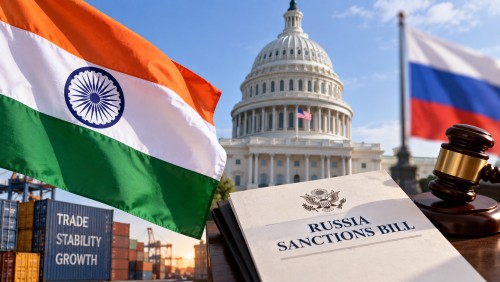
The recent passage of a sanctions bill by the US House of Representatives could significantly impact India’s trade and economic interests, potentially leading to tariffs as high as 100% on nations importing Russian oil. In response, India has vowed to take all necessary steps to safeguard its economic stability and ensure energy security for its population of 1.4 billion.
The Lindsey O. Graham Sanctioning Russia and Iran Act of 2026, which passed the House with a vote of 262-159, targets countries like India, China, Slovakia, Hungary, and Azerbaijan if they persist in substantial trade with Russia. This legislative move follows the bill’s earlier approval by the US Senate and now awaits the president’s signature to become law.
India’s Ministry of External Affairs has expressed its commitment to maintaining a diversified energy portfolio, adjusting to dynamic market conditions to meet its energy needs. The ministry disclosed that discussions have already taken place with senior US officials to address the potential ramifications of the proposed sanctions.
In anticipation of possible economic fallout, India has intensified its energy procurement from alternative sources, such as the United States and Venezuela, while still relying heavily on Russian crude oil. The government’s proactive measures aim to mitigate any adverse effects on India-US trade relations and the broader global energy market.
As India continues to engage with domestic trade and industry stakeholders, the situation underscores the delicate balance between international diplomatic strategies and domestic economic imperatives. The outcome of these measures will be closely watched, given their potential to reshape global trade dynamics and energy alliances.