
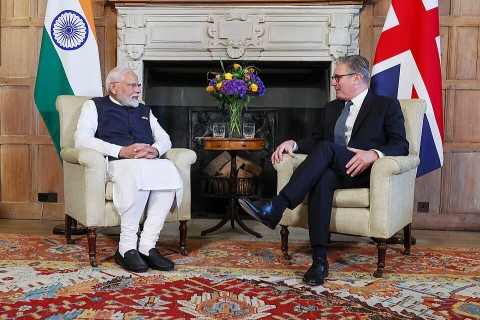
In a notable achievement as he steps down from his role, British Prime Minister Keir Starmer has successfully brokered the India-UK Free Trade Agreement (FTA), marking a significant milestone in diplomatic relations. The agreement was finalized during a meeting with Indian Prime Minister Narendra Modi at the G7 Summit in 2026. Both leaders settled on July 15 as the start date for the India-UK Comprehensive Economic and Trade Agreement (CETA), expected to bolster the already thriving trade relationship, which stands at approximately £48 billion annually.
Starmer, since assuming leadership of the Labour Party after its 2019 electoral defeat, has been a strong advocate for closer ties with India. He prioritized the trade deal as a core objective of his administration, recognizing India’s growing economic clout on the global stage. He emphasized the potential for economic growth and the advantages of facilitating more accessible trade between the two countries.
Throughout his tenure, Starmer sought to enhance relations with the British Indian community and foster a robust partnership with India across various sectors. Under his guidance, Labour pledged to deepen collaboration with India in areas such as trade, security, education, technology, and climate initiatives. His career prior to politics was marked by a distinguished legal background, culminating in his role as Director of Public Prosecutions. Starmer’s ascent to Prime Minister followed Labour’s decisive victory in the 2024 elections.
Despite initial successes in stabilizing the economy and implementing domestic reforms, Starmer’s leadership encountered various policy challenges and political setbacks, which gradually eroded his support. In a heartfelt resignation speech, he acknowledged the loss of confidence among his parliamentary colleagues regarding his ability to lead Labour into the forthcoming general election. He accepted their decision with humility and gratitude, marking the end of a significant era in British politics.