
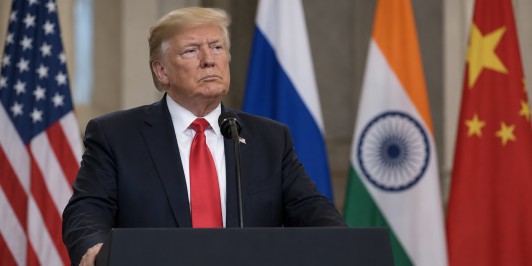
The potential for increased tariffs on countries purchasing Russian energy could significantly impact major buyers such as India and China, following new powers granted to the US president under a recent sanctions law. This development could lead to higher costs for these nations as President Donald Trump considers leveraging these measures to pressure Russia into ending the war in Ukraine.
Last week, Trump signed the Lindsey O. Graham Sanctioning Russia and Iran Act of 2026, which authorizes the US president to impose tariffs of up to 100% on countries that import Russian oil and natural gas. This legislation marks a significant escalation in US efforts to bring Russia to the negotiation table over the ongoing Ukraine conflict. While the law does not mandate immediate tariff increases, it provides the president with discretionary power to impose such measures on the top five buyers of Russian energy, including India and China.
Addressing the UN General Assembly, Trump highlighted the new tariff powers as a tool to potentially end the war in Ukraine. He emphasized his readiness to utilize these powers if deemed necessary and called for a cessation of hostilities in the region. The announcement underscores Washington’s ongoing strategy to increase pressure on Moscow, with the aim of initiating peace talks.
The sanctions law also extends beyond tariffs, introducing measures against Russian officials, financial institutions, and entities within the energy sector accused of circumventing existing restrictions. This broad scope of sanctions reflects a comprehensive approach to curtail Russia’s ability to continue its military engagements in Ukraine.
Ukrainian President Volodymyr Zelenskyy has expressed support for the new sanctions, indicating his willingness to engage in further discussions with the aim of resolving the conflict. The potential for future tariffs and sanctions is poised to play a critical role in shaping international dynamics concerning the ongoing war, as affected countries, including India and China, assess the implications for their energy purchasing strategies.