
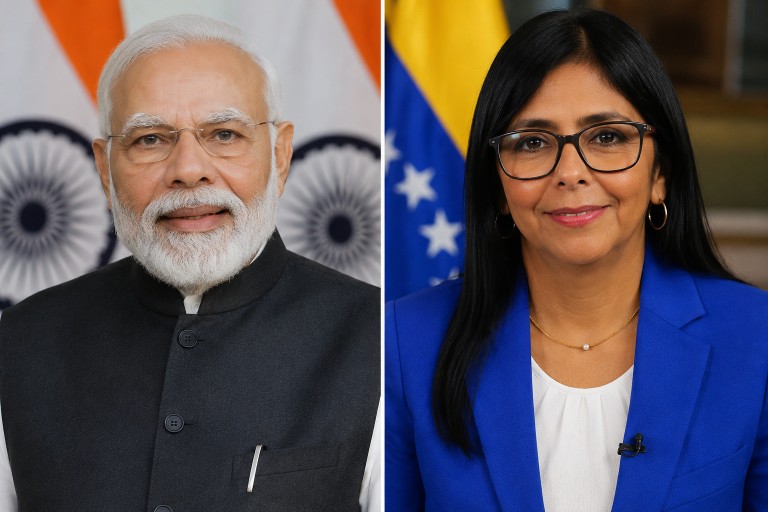
In a bid to strengthen bilateral ties, India’s Prime Minister Narendra Modi and Venezuela’s acting President Delcy Rodríguez engaged in pivotal discussions in New Delhi, centering on energy security, critical minerals, pharmaceuticals, and trade. This dialogue comes amidst Venezuela’s rise as a significant crude oil supplier to India, as the South Asian nation seeks to diversify its energy imports amid global supply chain disruptions.
Rodríguez is on a four-day official visit to India, accompanied by a delegation that includes five ministers. The talks focused on forging a long-term energy partnership that encompasses oil exploration, production, and refining. Venezuela, home to some of the world’s largest proven crude oil reserves, showed interest in establishing India as a stable long-term energy partner.
India also underscored the potential for collaboration in critical minerals, such as gold and diamonds, exploring joint opportunities for exploration and resource development. The pharmaceutical sector was another key area of discussion, with India offering its expertise in affordable generic medicines and healthcare solutions. However, the Indian side expressed concerns over more than $500 million in dividends that ONGC Videsh Limited has been unable to repatriate from Venezuelan oil projects, a matter that remains under discussion within broader economic talks.
Following the meeting, Prime Minister Modi highlighted the importance of cooperation across energy, critical minerals, technology, agriculture, and healthcare. He emphasized that the relationship between India and Venezuela holds significant value for the Global South. Meanwhile, Rodríguez’s itinerary includes visits to industrial and energy facilities, notably the Reliance Industries refinery complex in Jamnagar, which stands as one of the world’s largest oil refining hubs and a major processor of Venezuelan crude.
This visit signifies the deepening economic engagement between the two nations as they aim to enhance cooperation across energy and strategic sectors. Both countries are keen on expanding their partnership in these critical areas, reflecting their commitment to addressing mutual interests and global economic challenges.