
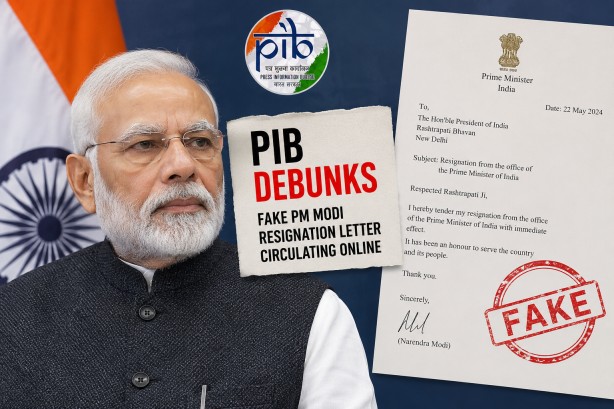
A viral social media post claiming that Indian Prime Minister Narendra Modi has resigned from his position has been debunked as false. The post, which included a letter bearing an alleged signature and the national emblem, was identified as a fabrication by the government’s Fact Check unit. They confirmed that the letter was not genuine and that Prime Minister Modi has not issued any resignation.
The government’s clarification underscores the growing challenge of misinformation, particularly on social media. The public has been urged to rely on official sources when verifying such claims, to prevent the spread of false information. This call for vigilance comes as authorities continue to tackle the issue of manipulated content, which has become increasingly prevalent online.
Recently, there have been other instances of misinformation targeting the Prime Minister, including AI-generated videos that falsely depicted him making statements about student protests. These occurrences highlight the sophistication with which false content can be produced and disseminated, posing significant challenges for both the public and authorities in discerning fact from fiction.
As the digital landscape evolves, the spread of misleading content necessitates a robust response from both the government and the public. Authorities have reiterated the importance of verifying information through credible channels before sharing it online, hoping to curb the impact of such misinformation.