
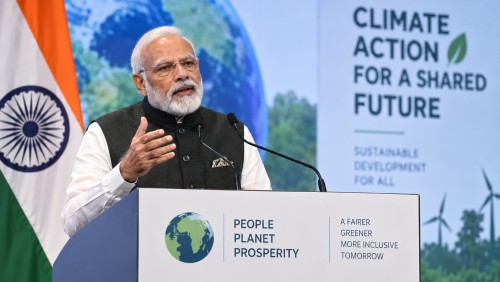
The global debate on carbon emissions often places undue blame on developing countries, but recent remarks from Indian Prime Minister Narendra Modi highlight the need to reconsider this narrative. Speaking at an international conference in New Delhi, Modi emphasized that India’s per capita carbon emissions are significantly lower than the global average, underscoring the country’s commitment to sustainable development.
India’s strides in renewable energy were a focal point of Modi’s address at the “Future of Environment and Climate Dynamics” conference, organized by the National Green Tribunal. The Prime Minister noted that India has not only met its Paris Agreement commitments ahead of schedule but is also making substantial progress in expanding its non-fossil fuel and solar energy capacities. These efforts are part of India’s broader strategy to address environmental challenges while fostering economic growth.
The two-day conference, held on September 19 and 20, brought together a diverse group of stakeholders, including judges, government officials, environmental experts, and legal representatives from various countries. The event served as a platform to discuss pressing environmental and climate issues, with a focus on enhancing policy implementation, ensuring environmental justice, and fostering institutional cooperation.
During the conference, four technical sessions were convened to tackle key environmental topics and explore future approaches to climate challenges. These discussions are crucial as countries around the world grapple with the need to balance development goals with environmental sustainability.
Modi’s statements serve as a reminder of the complexities involved in global climate dynamics and the importance of recognizing the unique challenges and achievements of developing nations like India. As the international community continues to seek effective solutions to the climate crisis, India’s example of proactive engagement in renewable energy development offers valuable insights.