
India’s ambitious infrastructure projects are transforming travel across the nation, slashing journey times and enhancing connectivity. The extensive network of new expressways, rail services, and tunnels is significantly shortening travel durations between major cities and remote regions, promising practical benefits for millions of commuters and businesses.
The Delhi-Mumbai Expressway stands out as a prime example, reducing the road trip between these two major cities to just 12 hours, down from a previous 33-hour ordeal. This is part of a broader trend seen across the nation, with the Delhi-Meerut Expressway cutting the journey to 50 minutes from 2.5 hours, and the Bengaluru-Mysuru Expressway reducing travel time to 75 minutes from nearly three hours.
In addition to expressways, the development of bridges and tunnels has greatly improved regional connectivity. For instance, the Bhupen Hazarika Setu in the Northeast has slashed travel time between parts of Assam and Arunachal Pradesh from six hours to just one hour. Similarly, mountain tunnels such as the Atal Tunnel are providing significant time savings, bypassing the Rohtang Pass to cut down travel times by four to five hours between Manali and the Lahaul-Spiti region.
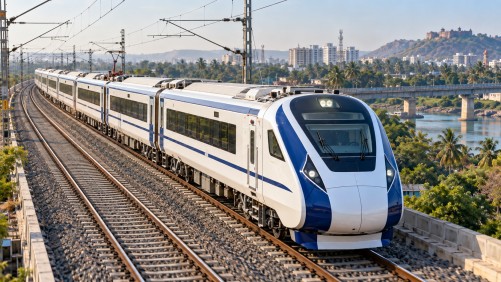
Rail travel is also undergoing a rapid transformation with the introduction of Vande Bharat trains. These modern rail services have reduced journey times significantly on several routes. The New Delhi-Varanasi service now takes about eight hours, while the Katra-Srinagar route has been cut to approximately three hours. Speed improvements are planned for 549 trains by 2026, promising even more reductions in travel times.
Looking ahead, the Mumbai-Ahmedabad High-Speed Rail Corridor is poised to further revolutionize Indian travel. Once operational, this bullet train is expected to cover the 508 km distance in just under two hours, compared to the eight to nine hours required by road. Scheduled for its first service in August 2027, this project includes a unique undersea tunnel beneath Thane Creek, marking a significant milestone in India’s infrastructure development.
These infrastructure advancements are not just about cutting travel times; they are set to boost economic growth by improving access and connectivity across the country. As India continues to expand its network of expressways, railways, bridges, and tunnels, the nation is on a path to becoming more interconnected than ever before.