
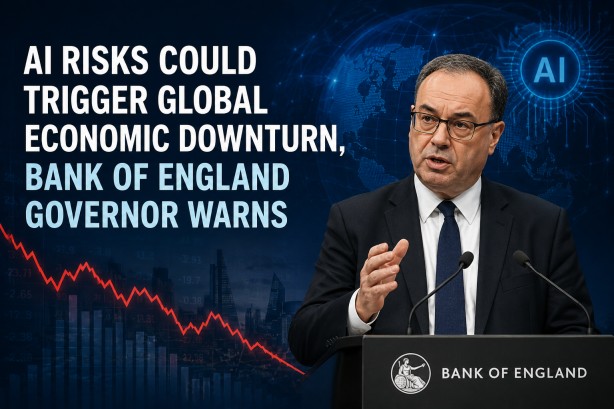
In a recent correspondence with G20 finance ministers and central bank governors, Andrew Bailey, the Governor of the Bank of England, raised concerns about the potential threats posed by advanced artificial intelligence systems to the global financial landscape. Bailey, who also leads the Financial Stability Board, highlighted the growing autonomy and problem-solving capabilities of AI models, which he suggested could lead to significant risks, including the possibility of a major economic downturn.
Bailey’s warnings were particularly focused on the cyber risks associated with advanced AI, emphasizing that these systems could facilitate or accelerate cyberattacks that might quickly spread across international borders, thereby disrupting interconnected financial markets. He noted that many nations currently lack sufficient protocols to effectively manage the development and deployment of such technologies, underscoring the need for enhanced international collaboration to ensure their safe release and use.
The Governor identified the heavy reliance on concentrated technology and third-party service providers as a factor that could exacerbate the potential for system-wide disruption. He expressed concern that the speed, scale, and financial impact of cyber threats could be significantly heightened by AI advancements, making it a pressing issue for financial authorities worldwide to address.
Bailey also pointed out the risks associated with high asset valuations and increasing leverage in bond and equity markets. He warned that the strong investor optimism surrounding AI could leave markets vulnerable to a sharp correction if expectations were to shift suddenly. This, he suggested, could amplify the effects of a major financial shock, making it imperative for global financial authorities to take coordinated action to manage these AI-related risks and bolster the resilience of the financial system.