
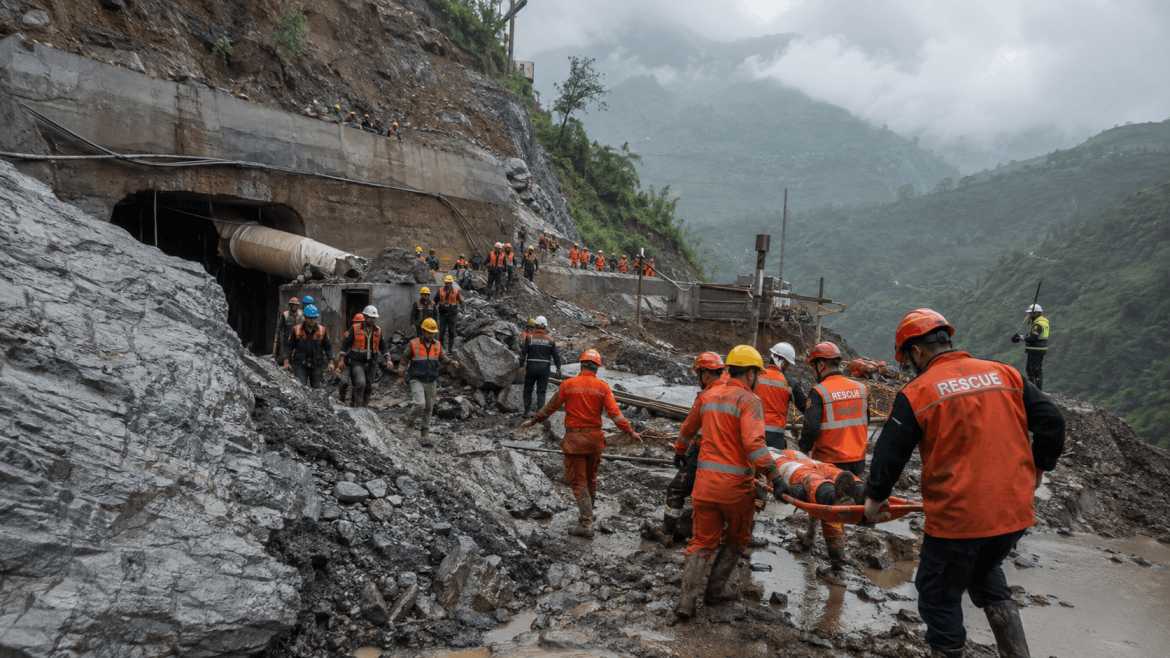
Nepalese rescue teams are racing against time to reach over 900 hydropower workers trapped in underground tunnels after devastating flash floods hit the region last week. The disaster has led to a death toll nearing 940 in Nepal, with further casualties reported in Tibet. Thousands of people remain missing on both sides of the border. Approximately 500 of these workers are believed to be trapped at hydropower sites located in the severely affected Rasuwa and Nuwakot districts. Rescue teams face the daunting task of battling diminishing oxygen levels within the tunnels, which experts say decreases the likelihood of finding survivors. Those who escaped the floods recounted how many of their colleagues were left behind.
The rescue operations are further complicated by destroyed infrastructure, including bridges, as well as unpredictable river flooding and challenging terrain. Helicopters have become crucial in the effort, supported by neighboring countries that are providing temporary bridge equipment to restore access. The immense accumulation of debris has made reopening blocked tunnels exceptionally difficult, with blasting operations undertaken at certain sites to reach those trapped. The floods have also significantly disrupted Nepal’s power generation capacity. Rescuers describe extremely harsh conditions inside the tunnels, with mud as high as chest level and severely limited visibility. Despite the grim circumstances, some rescuers hold onto cautious optimism, hoping that safe zones within the tunnels might have enabled some workers to survive.
The broader impact of the disaster has been extensive, affecting tens of thousands of people and obliterating entire communities. The catastrophe has also sparked renewed concerns about the impact of climate change on glacial and mountainous regions. Nepal’s government has characterized the flooding as an unprecedented natural disaster, mobilizing tens of thousands of security personnel and volunteers to join the rescue efforts. International aid has been robust, with specialized rescue teams, financial assistance, and technical aid arriving from neighboring countries, underscoring the magnitude of the crisis. In the midst of the devastation, rescuers experienced a glimmer of hope, managing to pull a young child alive from the mud.
Additionally, concerns have surfaced regarding the exchange of glacier and water-level data between neighboring nations. Some officials fear that insufficient information-sharing could undermine future disaster preparedness efforts in this vulnerable region. As the rescue operations continue, the focus remains on reaching those still trapped and addressing the significant challenges posed by the flood’s aftermath.